
24/7 Emergency Line Open
Water Heater Repair in Cottonwood, AZ: Cold Showers, Leaking Tanks and Pilots That Will Not Stay Lit
The shower runs lukewarm, then cold, or a puddle has formed around the base of the tank. Call, say whether the heater is gas or electric and a plumber serving your area can work through what failed.
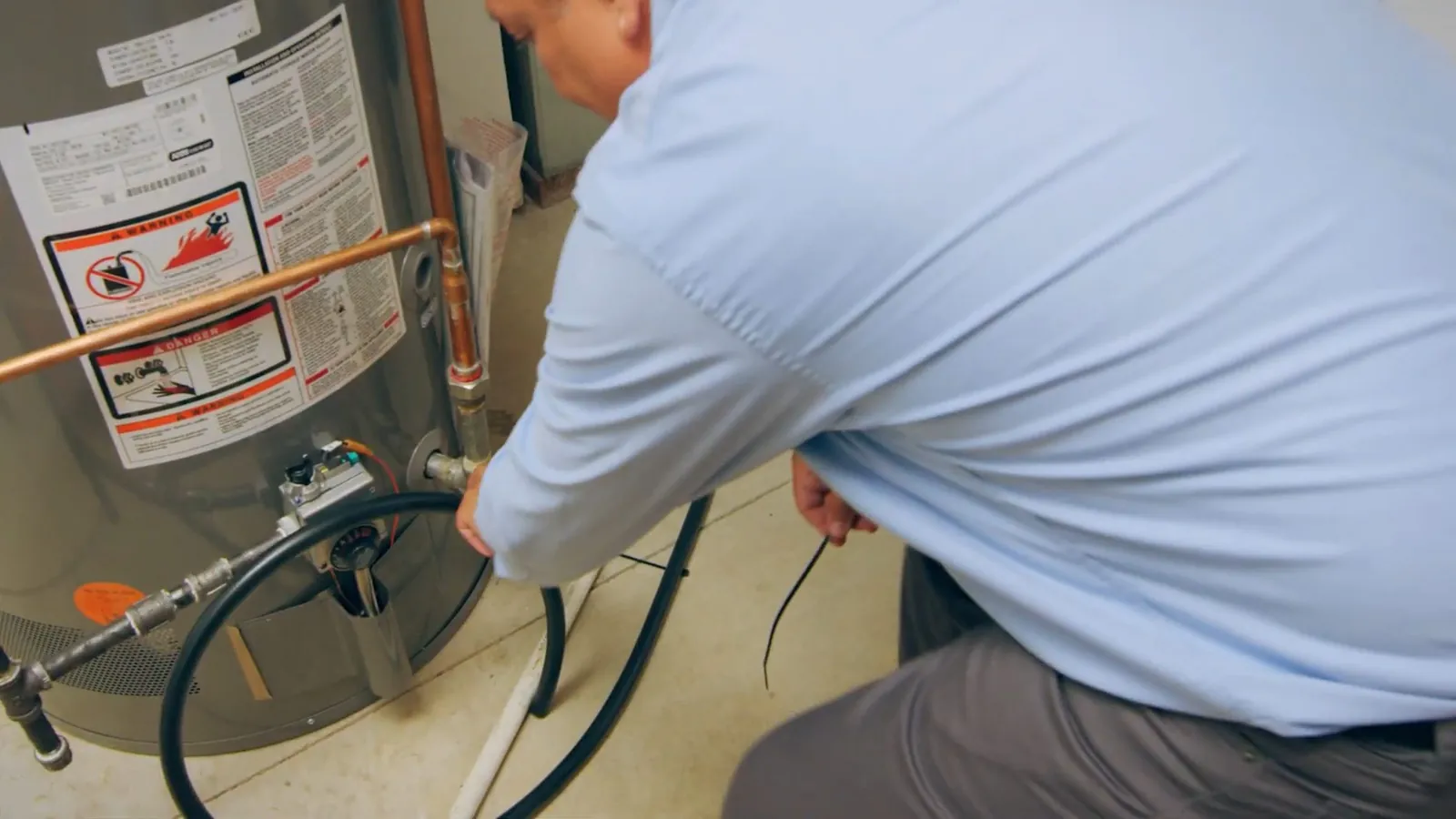
Before you call
No hot water: five quick checks that save a visit or explain one
- Electric heater: check the breaker, and press the red reset button on the upper thermostat if there is one.
- Gas heater: look at the pilot window or the control display to see whether the flame or igniter is working.
- Check the thermostat setting, since dials get bumped.
- Run hot water at a faucet far from the heater, then one near it, to learn if every tap is affected or only one.
- Look at the base of the tank for moisture.
Tell the dispatcher what you found. A heater that is completely cold points to a different part than one that heats slowly.
Gas or electric: the same symptom can mean different parts
Most repairs follow from what the heater burns. Electric models fail at the heating elements, the thermostats or the wiring. Gas models fail at the pilot assembly, the igniter, the thermocouple or the gas control valve. Telling the plumber which you have narrows the visit before anyone arrives. In the Verde Valley, natural gas service is listed under UniSource Energy Services, and some homes use propane, so confirm what fuels your unit.
| Symptom | Electric heater | Gas heater |
|---|---|---|
| No hot water at all | Tripped breaker, failed upper thermostat or element | Pilot out, bad thermocouple or igniter, closed gas valve |
| Lukewarm water | Failed lower element or lower thermostat | Dirty burner, sediment, a weak flame |
| Water runs out fast | Burned-out element, sediment or a broken dip tube | Sediment, a failing burner or a broken dip tube |
| Popping or rumbling noises | Sediment on the elements | Sediment on the tank bottom |
| Water at the base | Leak at a fitting or a failed tank | Leak at a fitting or a failed tank |
The tank-side causes, such as sediment and leaks, are the same for both types.
A leaking tank: what is fixable and what is not
Water around the heater can come from several places. A loose supply connection, a dripping relief valve or a corroded drain valve is a repair. Water that appears to be seeping through the tank wall is a different story, because a tank that has failed inside cannot be patched.
Shut off the cold water supply to the heater, using the valve above the tank. For electric units, turn off the breaker. For gas units, set the gas control to off. Then call. A heater that has been leaking for a while may have damaged the floor, and restoration after a leaking tank covers drying afterward.
When a repair would cost a large share of a new unit, replacement is the better choice. That decision, and the installation itself, are covered under water heater replacement. Tankless units have their own page for tankless water heaters.
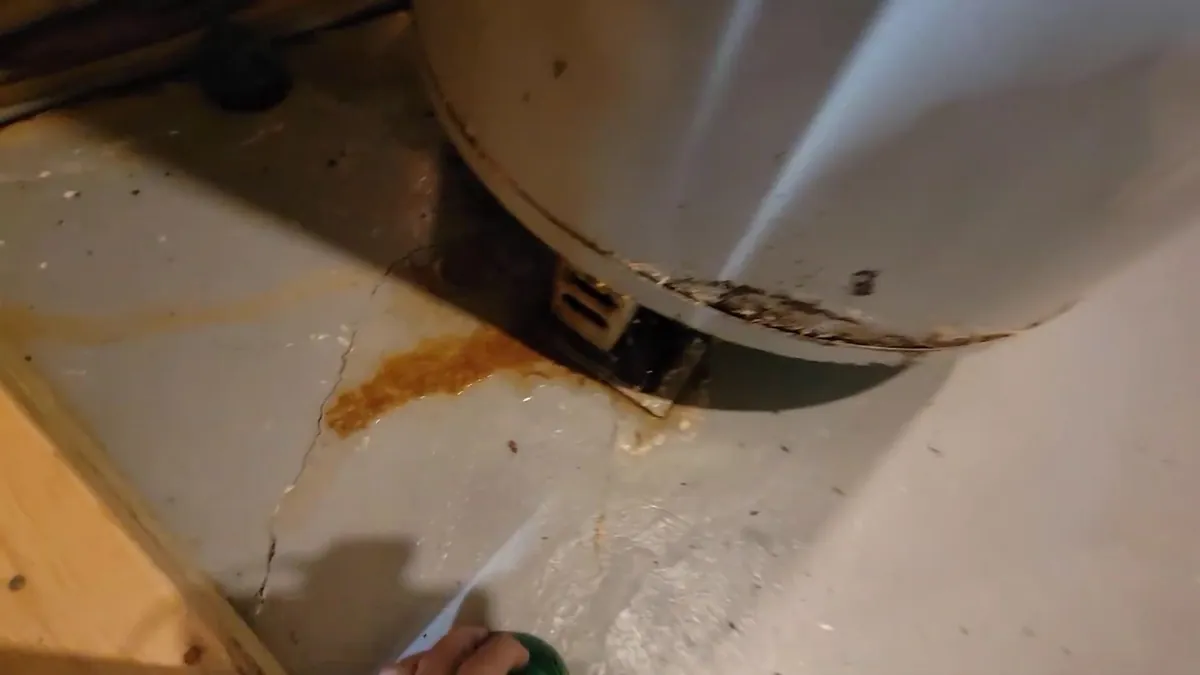
Call now and tell the dispatcher what the tank looks like.
Maintenance
Sediment, flushing and what hard water does to the tank
Minerals settle at the bottom of a tank over time. They insulate the water from the burner or coat the lower element, so the heater works harder and runs noisily. A popping or rumbling sound during heating is the classic sign.
Flushing the tank clears much of that buildup, and an anode rod check shows how much protection is left against corrosion. A flush is more useful on a tank that has never had one. On a very old, heavily scaled tank, opening the drain can sometimes start a leak, so ask the plumber to inspect first.
Hardness data for this ZIP code comes only from an outside estimate, roughly 17 grains per gallon, a level labeled very hard. The city water report has no hardness line, so ask your provider for the current figure. A softener helps, and water softener and filtration explains how it is sized.
Source: waterhardness.org estimate, March 2026 dataset; City of Cottonwood 2024 Consumer Confidence Report.
Pilot lights, igniters and burners
A gas heater makes hot water only while its burner runs. The pilot, or on newer units an electronic igniter, lights the burner, and a thermocouple tells the gas valve a flame is present. If the thermocouple fails, the valve closes and the heater goes cold even though the pilot looks fine.
A pilot that keeps going out can come from a drafty location, a dirty burner or a failing thermocouple. Repeated relighting without finding the cause is not a fix.
Permits and who should do the work
The City of Cottonwood building permit handout lists water heater replacement among the common projects that need a permit. Small parts that leave the equipment’s approval unchanged, such as an element or a thermostat, do not. Ask the plumber which category your job is in and who pulls any permit. The office to call is Community Development, (928) 634-5505.
Water heaters are fixed by plumbers. Some electric repairs involve wiring, so a plumber who also handles that side, or works with an electrician, is useful. A leak that is not from the heater at all, such as water entering the house after a storm, is a separate matter, covered in the questions below.
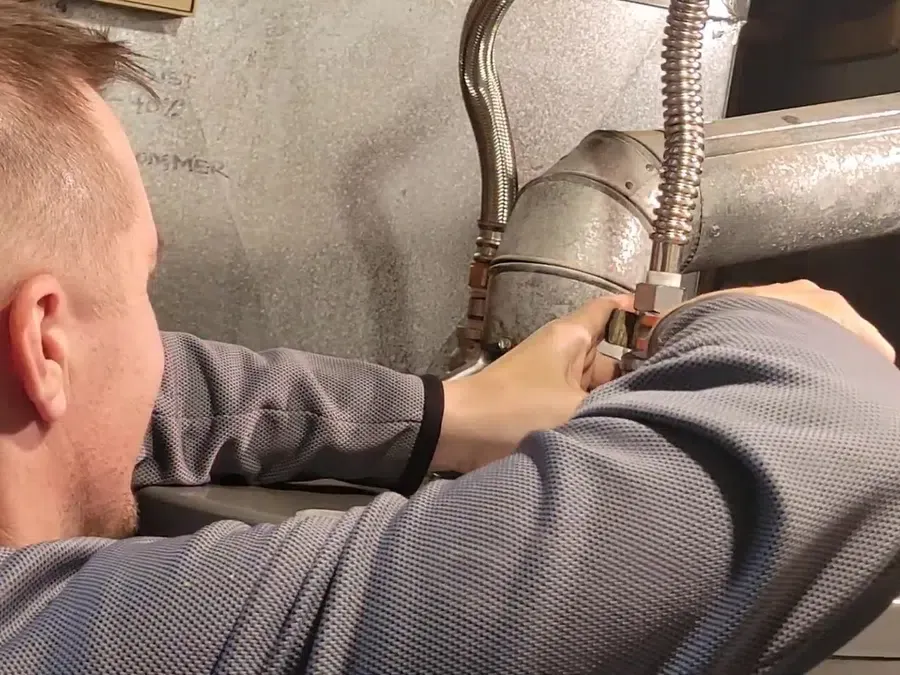
Give the heater type and the symptom, plus your Cottonwood address.
Water heater repair questions, answered
How long can a leaking water heater keep running?
There is no safe timeline. A small drip at a valve may last a while, but a leak through the tank wall can worsen without warning. Close the cold supply valve above the tank, turn off power or gas and call.
Should I flush my water heater?
A flush removes sediment and can quiet a noisy tank. It helps most on a tank that is not too old. An aged tank with heavy scale can start to leak when the drain is opened, so ask the plumber to look at it first.
Who fixes water heaters?
A plumber. Gas units involve the gas control, igniter or thermocouple. Electric units involve elements and thermostats. Some jobs touch wiring, and your plumber will say when an electrician should be brought in.
Does tank height matter when a heater needs replacing?
It does. Tall and short tanks hold different amounts and fit different closets. Measure the space and tell the plumber, because a repair that turns into replacement is easier when the size is known.
Water is coming into my basement after a storm. Is that the water heater?
Probably not. Water that appears only after heavy rain usually comes through the foundation or from grading, not from plumbing. If the heater is dry and the meter is still, a drainage or foundation specialist is the right call.
Name your heater type, and dispatch will arrange a plumber.