
24/7 Emergency Line Open
Emergency Sewer Line Repair in Cottonwood, AZ: Backups, Camera Inspections and Trenchless Options
Several drains are slow at once, a toilet bubbles when the shower runs, or sewage is coming up through a floor drain. Call and name the affected fixtures. A plumber serving your area can begin sorting out whether the problem is yours or the street’s.
Right now
Sewage backing up: what to do before anyone arrives
- Stop using water. No flushing, no showers, no washing machine or dishwasher.
- Keep people and pets out of the affected room, and move anything absorbent out of the wet area.
- Check whether neighbors have the same problem. If they do, the blockage may be in the city main.
- Call and describe which drains are affected and how fast the water is rising.
The question of who handles it comes next, and the answer depends on where the blockage sits. A plumber serving your area can clear and diagnose a private line. A blockage in the public main is for the city’s Utility Department, at 111 N Main Street.
Who is responsible for which part of the line? Confirm it before paying for a dig
A sewer system has a public part and a private part. The private line, often called the lateral, runs from the house to the point where it joins the city main. Where exactly private responsibility ends varies from place to place.
No published Cottonwood rule on that boundary turned up in the city’s utility material. Rather than guess, ask the Utility Department where the private line ends for your address, and write down the answer before a repair is quoted.
| Part of the system | Who usually deals with it | How to confirm |
|---|---|---|
| Pipe inside the house and under the building | You, with a plumber | The plumber traces it with a camera |
| Pipe between the house and the property line | Usually you, subject to the utility’s rules | Ask the Utility Department where private responsibility ends |
| City main in the street | The city Utility Department | Call the department if neighbors are also affected |
| Septic tank and drain field | You, with a septic specialist | Septic work is outside this service |
Under Ordinance 736 (2023), only connected properties pay city sewer fees, and some are on septic. Your sewer bill shows which applies.
Camera inspection: see inside the line before deciding on anything
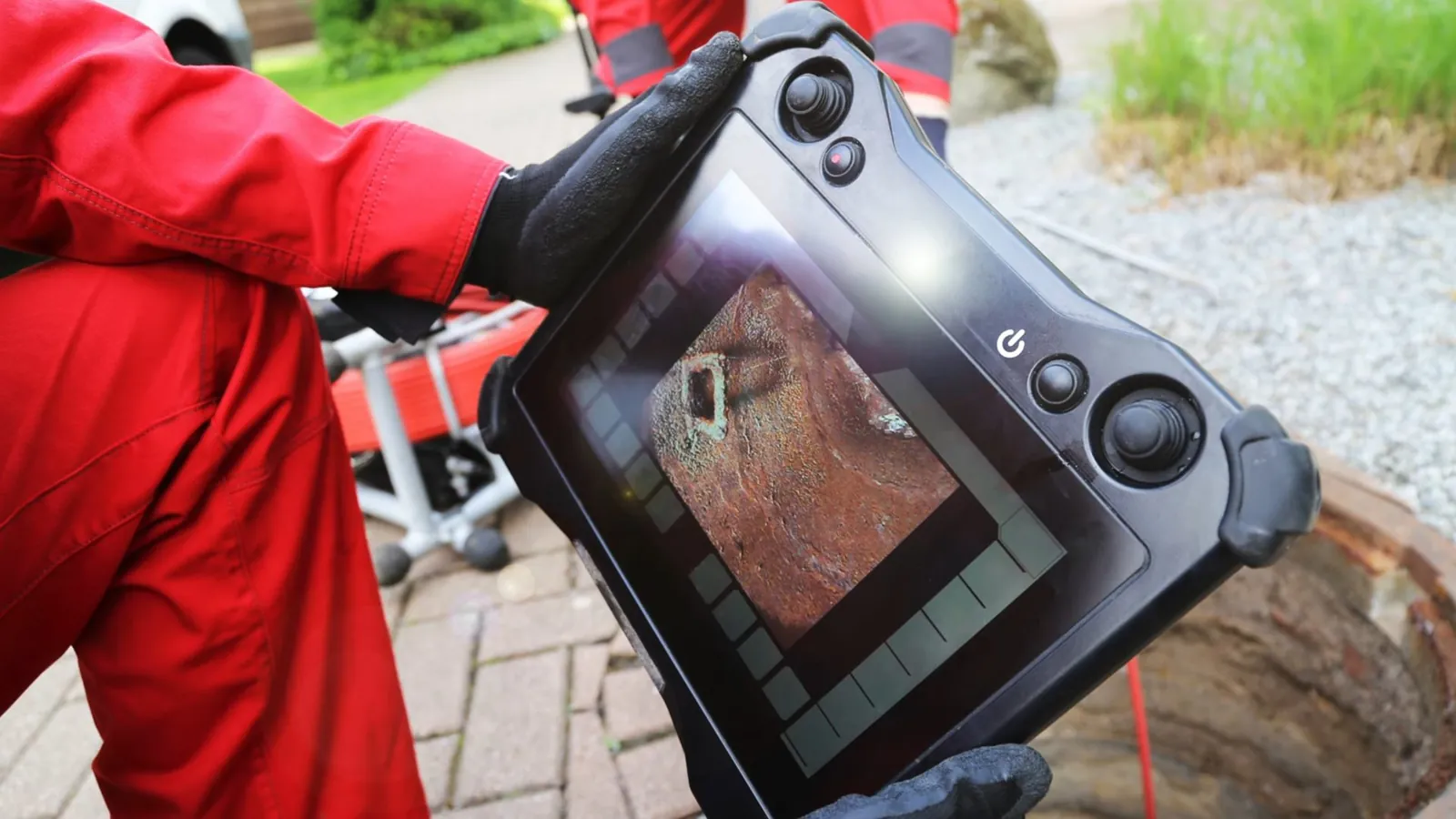
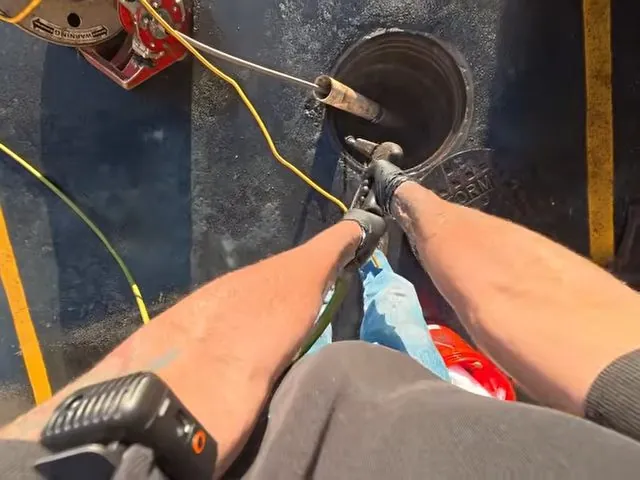
A small waterproof camera on a flexible cable is fed into the line through a cleanout or a removed toilet. The plumber watches a live picture and notes distance as the camera travels. The footage can show a clog, roots at a joint, a crack, a sag where water pools or a section that has collapsed.
Ask for a look at the video and a short written note on what was found and where, measured from the entry point. It protects you whichever way the decision goes, and it gives the utility or a second plumber something to work from. A locator can then mark the surface above a problem so any digging stays small.
Many homes have a cleanout, a capped pipe near the house or at the property edge. It gives direct access and saves removing a toilet. If you are not sure whether you have one, the plumber will look.
Ring now and ask for a camera check.
Clearing a blocked sewer line
When the camera shows soft material, clearing may be enough. A heavy cable with a cutting head, often called a rooter, opens the line. Hydro jetting can then wash the pipe wall. The same methods are explained in detail on the drain cleaning page.
A line cleared without finding the cause tends to block again. If the footage shows roots, a crack or a belly, clearing is a temporary step and a repair is the lasting answer.
Repairing a damaged section
A single break, an offset joint or a short root-damaged stretch can often be fixed without replacing the whole run. The plumber exposes the damaged section, cuts it out and joins in new pipe. A camera pass afterward confirms the line is clear and flowing.
Ask how deep the pipe lies and how the surface will be restored. The city handout treats plumbing changes as permit work, so confirm the requirement with Community Development at (928) 634-5505.
When replacing the line is the better answer
If the camera shows cracks along most of the run, long sags or a pipe that has collapsed in several places, repeated spot repairs add up. Replacement gives one continuous, new line. It costs more in disruption than a spot repair, and the plumber should explain why it is justified.
Pipe material matters. Cast iron rusts from the inside, clay pipe can crack or separate at joints, and fiber pipe sold as Orangeburg softens with age. You do not need to identify yours. The camera and the age of the house usually tell the story.
Trenchless lining, pipe bursting and open trench compared
Trenchless methods repair a line with little digging. Not every line suits them, and the camera decides.
| Method | How it works | Where it fits |
|---|---|---|
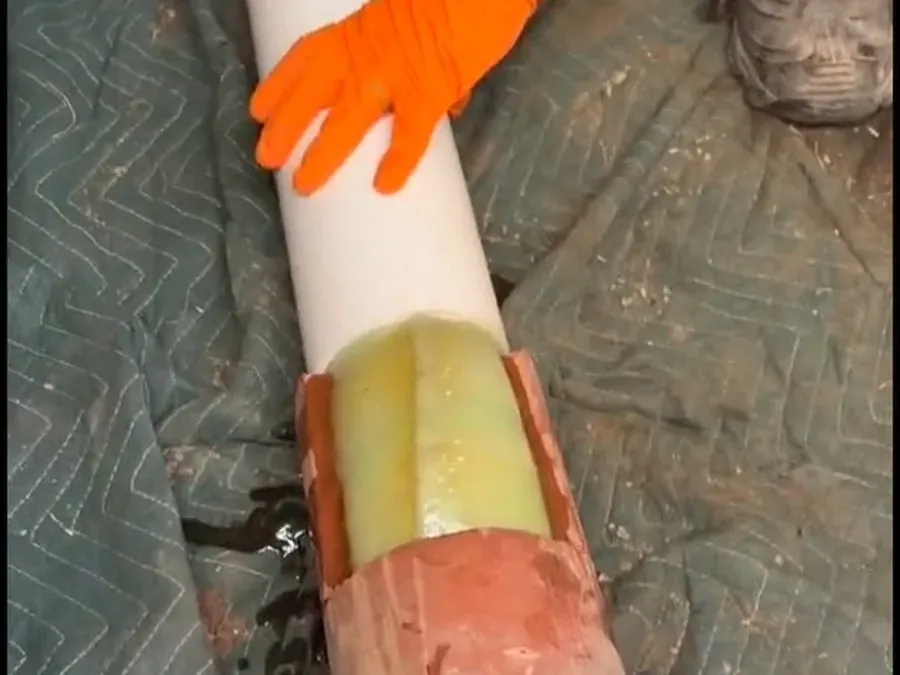
| Cured-in-place lining | A resin-soaked liner is pulled in and hardened against the old pipe wall | Pipe that is intact but cracked or leaking at joints |
| Pipe bursting | A cone pulls new pipe through while breaking up the old one | Lines too damaged to line, with a clear path |
| Open trench | The line is dug up and replaced section by section | Collapsed or badly offset pipe, or short runs near the surface |
Call 811 at least two full working days before any digging so buried lines can be marked. A buried gas or water line is the last thing anyone wants to find with a shovel, and repairing a buried supply line is a separate job.
Describe it by phone, and the dispatcher can tell you what to check.
What homeowners ask about sewer lines
Is a sewer camera inspection worth it?
Yes when a clog returns, when several drains are slow or when you are buying or repairing a home. It shows whether the line is clear, cracked, rooted or collapsed, so the next step rests on evidence instead of guesses.
Who do I call for a sewer backup?
Call a plumber first if the problem is in your house, then the city Utility Department if neighbors are affected or the plumber finds the blockage in the main. Stop using water while you wait.
What is a sewer cleanout and do I have one?
A cleanout is a capped pipe that gives direct access to the sewer line, usually outside near the house or at the property edge. If you cannot find one, a plumber can look, and installing one makes every future inspection easier.
Should I choose trenchless repair or replacement by digging?
That depends on what the camera shows. Trenchless lining or bursting suits many lines with little surface damage. Collapsed or badly offset pipe often needs open trench work. Ask the plumber to show the footage and explain why one method fits.
The bathroom smells of sewage and a trap will not hold water. What should I check?
A dry trap lets sewer gas rise, and running water in the fixture often fixes it. A trap that keeps emptying, a slow leak under the floor or a venting problem is a different case, and a camera and a pressure test find it.
Tell dispatch which drains are affected and where you live.