
24/7 Emergency Line Open
Tankless Water Heater Service in Cottonwood, AZ: Switching From a Tank, Descaling and Error Codes
The shower goes cold halfway through, a tankless unit flashes an error code, or you are tired of a tank that takes up half a closet. Describe what you have or what you want, and a plumber serving your area can say what it would take.
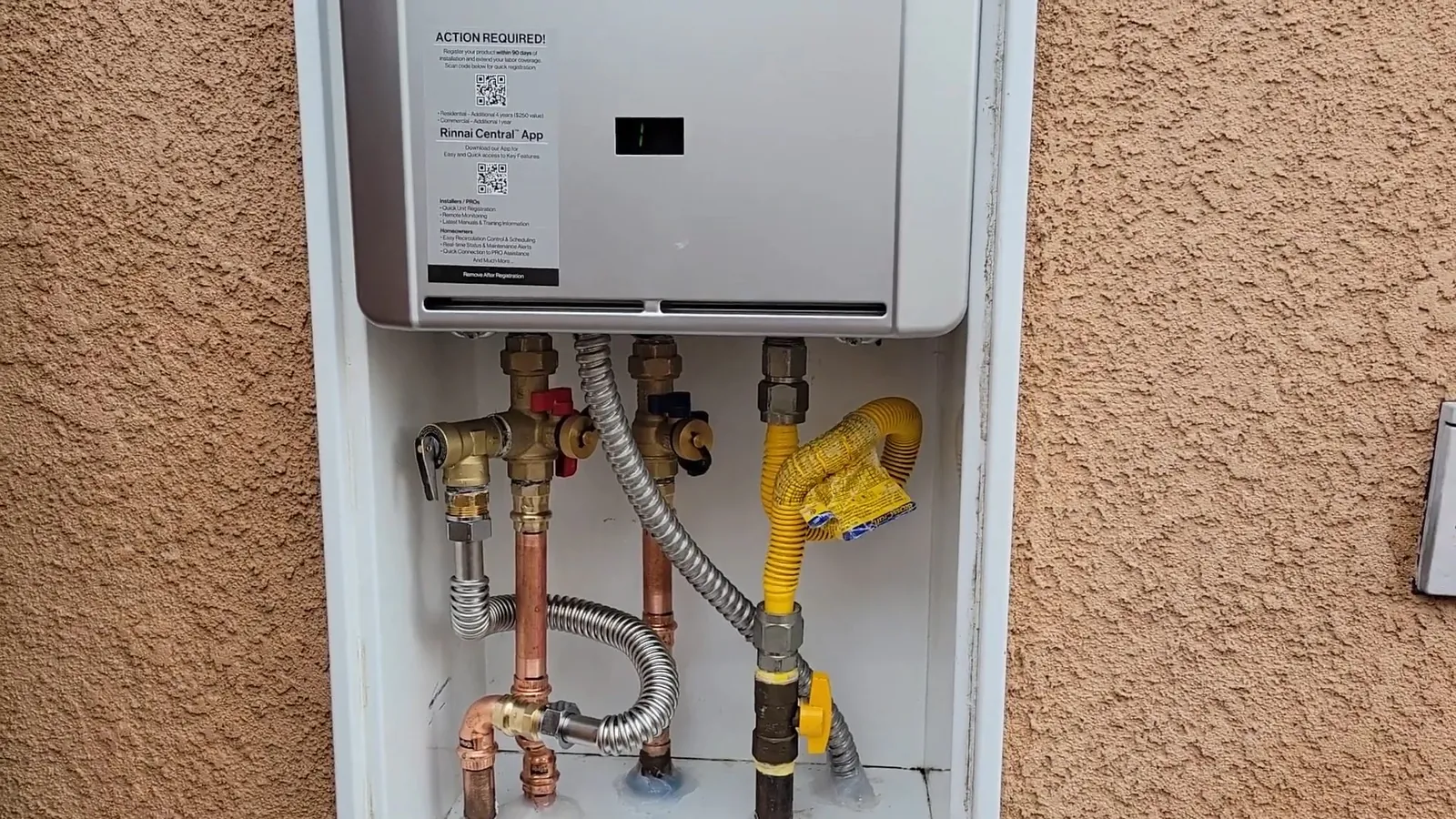
Fit check
Will a tankless heater work in your house? Four things to settle first
- Fuel. Gas units need a gas supply large enough for the burner, and electric units need heavy circuit capacity.
- Venting. Gas models vent outside, and the route and material are set by the manufacturer.
- Flow. A tankless heater heats water as it flows, so running several fixtures at once is the real test.
- Brand and parts. Models differ in how easily parts and support can be had, so ask which brand is proposed and how repairs are handled.
If you want a conventional tank instead, the page on tank water heater replacement compares both. An existing gas supply that is too small is a gas line job done before the heater goes in.
Hard water and tankless units: why descaling matters in this area
A tankless heater has narrow passages inside its heat exchanger. Mineral scale there restricts flow and forces the heater to work harder, and eventually it throws an error code or delivers lukewarm water.
Descaling means circulating a mild acid solution through the exchanger, then rinsing it. Many manufacturers call for it on a regular schedule in hard water, so check the manual for yours. Isolation valves installed at the heater make the job quick, which is worth asking for at installation.
An outside estimate, not a city figure, lists ZIP 86326 at about 17 grains per gallon, a level that source calls very hard. Ask your provider for the real number.
Source note: estimate from waterhardness.org (dataset dated March 2026); the city’s 2024 water quality report has no hardness figure.
Descaling protects the heater. A softener protects the heater and everything else on the water line, and it is explained on the water softener and filtration page.
Installing a tankless heater
A tankless install touches more systems than a tank swap. The plumber confirms the gas line size or the electrical capacity, plans the vent route through the wall or roof, sets the unit on the wall and connects water, drain and condensate lines where the model calls for them. Shutoff and flush valves are added so the heater can be serviced later.
Who pulls the permit, and what gets inspected, are fair questions. The city’s handout names plumbing changes as permit work, and a new gas or electrical supply can widen the scope. Community Development: (928) 634-5505.
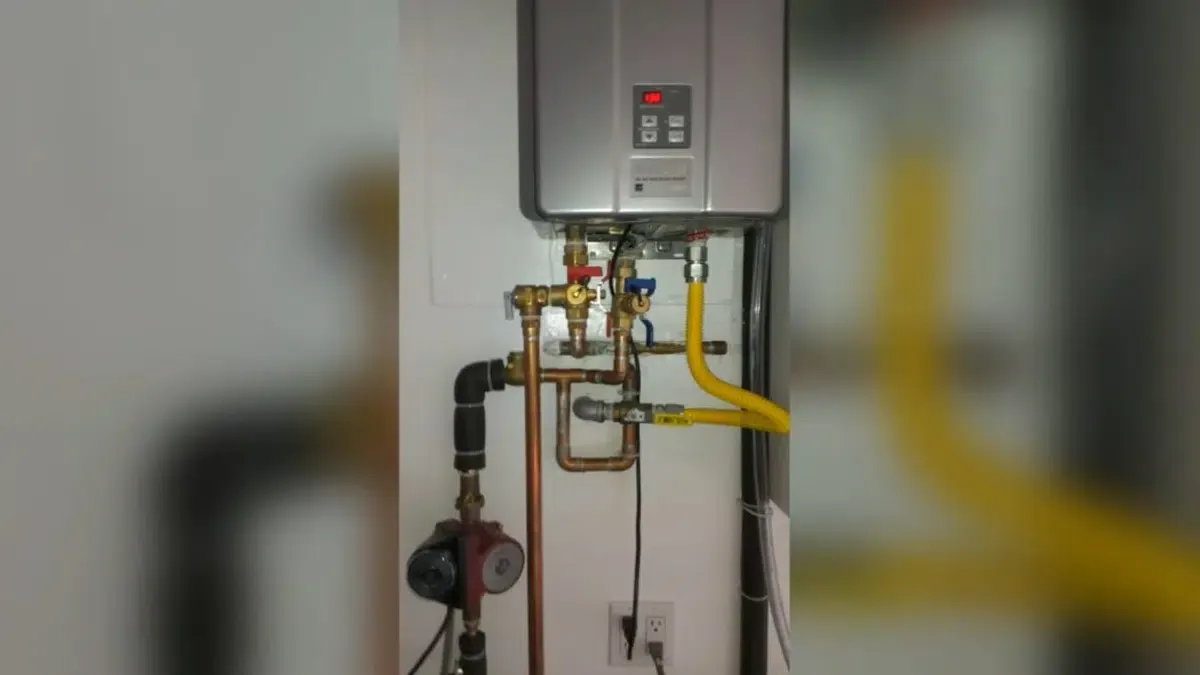
Describe your current heater and the space, and ask what the change would involve.
Converting from a tank to tankless
The old tank goes out, but the pipes around it are rarely ready for a new unit as they stand. Plan for changes to the gas line or electrical circuit, the venting, the water connections and sometimes the wall space.
Ask the plumber to explain flow rate in plain terms. A unit sized for one shower may struggle when two fixtures run together, so list how many fixtures usually run at once and the coldest incoming water you expect. That information, not the model name alone, decides which unit fits, and it keeps expectations realistic before anything is purchased.
Ask also about the condensate drain, the vent route and the electrical supply. Even gas units need power for the controls, and a plan that skips one of these items can stall the job halfway through.
| Item | Tank heater | Tankless heater |
|---|---|---|
| Space | Floor space in a closet or garage | Wall mount, often in a smaller footprint |
| Gas or power | Standard-size gas line or circuit | Often a larger gas line or a heavy-duty circuit |
| Venting | Draft hood or standard flue on gas models | Dedicated vent set by the manufacturer |
| Hot water supply | A stored volume that can run out | Continuous while flow stays within the rating |
| Maintenance | Tank flush and anode check | Descaling and filter cleaning |
Tank and tankless units each suit some homes better. A plumber can compare them for your layout.
Troubleshooting a tankless heater that quit
Start with the display. Most units show a code that points to the cause, and the manual lists them. Before calling, check that the gas valve is open or the breaker is on, that the water supply valves are open and that the unit has power.
| Symptom | Likely cause | Usual next step |
|---|---|---|
| No hot water at all | Power or gas off, a safety shutdown or a blocked vent | Check supply, read the code, call if it repeats |
| Lukewarm water | Scale in the heat exchanger or low flow | Descale and clean the inlet filter |
| Hot, then cold, then hot | Flow too low to keep the burner lit | Check fixtures and aerators, then the unit settings |
| Error code on the display | Sensor, ignition or venting fault | Look up the code and call with it in hand |
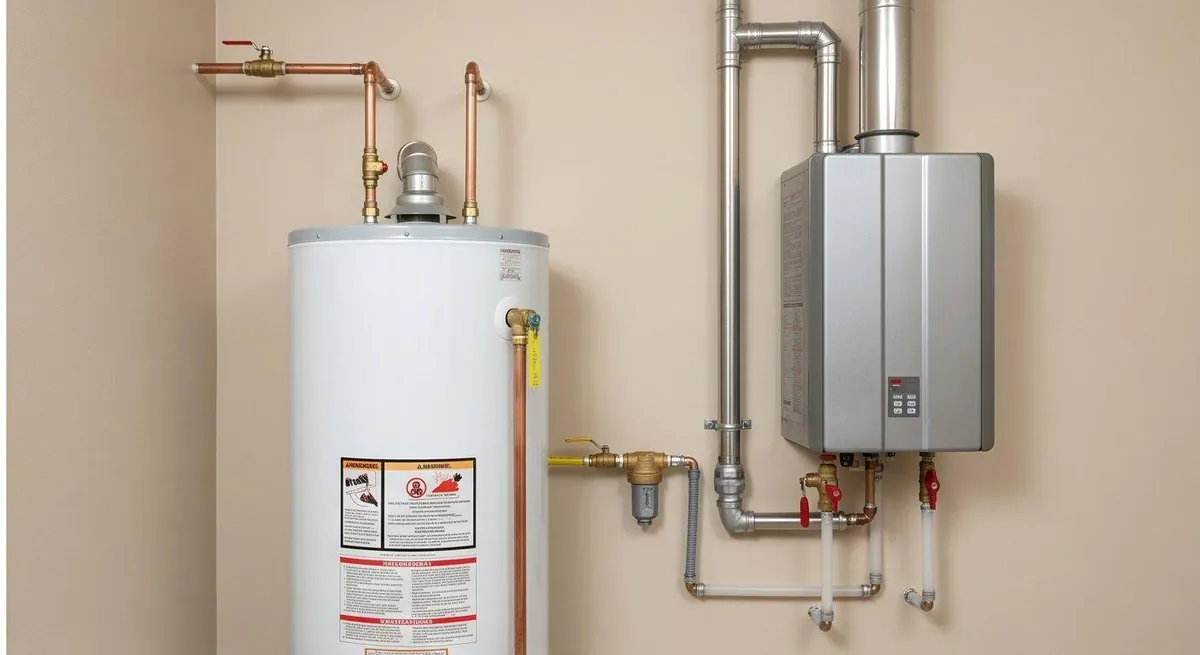
Call and read the display code to the dispatcher if there is one.
Tankless questions homeowners ask
Is a tankless water heater better than a tank?
Neither is better for every home. Tankless units save space and do not run out in a long shower, but they need larger gas or electric supply, a dedicated vent and regular descaling. A plumber can compare both for your layout and use.
Should I choose a gas or electric tankless heater?
It follows what your house can supply. Gas units need a gas line sized for the burner and a vent. Electric units need heavy circuit capacity. The plumber checks both before recommending one.
How often should a tankless heater be flushed or descaled?
Follow the manufacturer’s schedule, which is shorter in hard water. Valves installed at the heater make flushing quick, and skipping it lets scale restrict flow and trigger error codes.
Does a tankless installation need a permit?
It usually does, because plumbing and often gas or electrical work is involved. The city permit handout lists plumbing changes as permit work, so ask who will pull it.
Give your Cottonwood address, and a plumber will be lined up.