
24/7 Emergency Line Open
Cottonwood Plumbing Questions, Answered Plainly
Thirteen questions that come up before and after a plumbing call. Each answer starts with the short version, then adds the detail. If your problem is happening now, call first and read later.
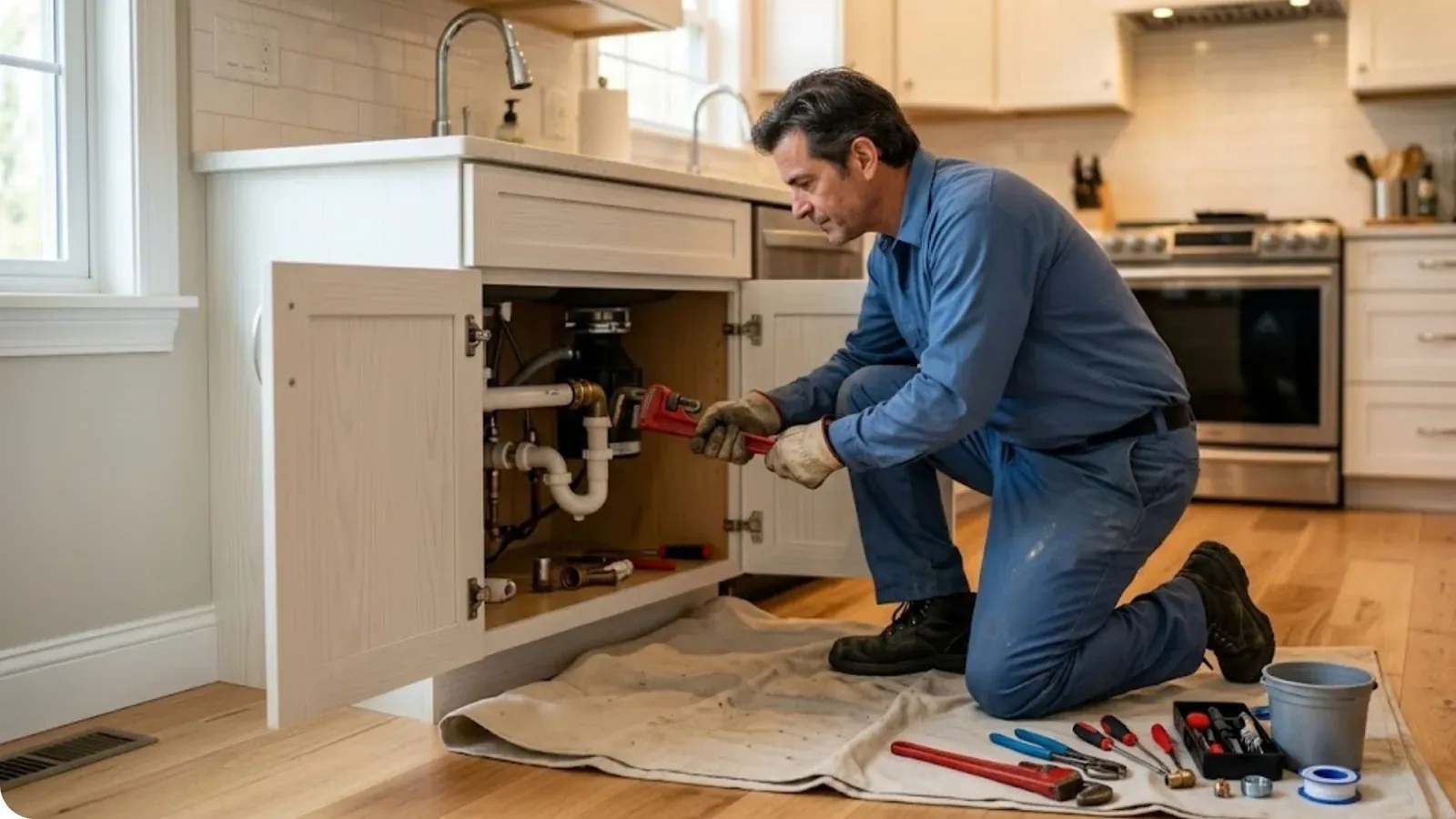
Calling dispatch and what happens next
These answers cover night calls, arrival, rentals and what the licensed and insured wording means.
What can I expect when I call at night or on a weekend?
A dispatcher answers, asks for your address, what is happening and a number to call back, then routes the job to a plumber near the address. Someone picks up at all hours.
Do now: close the shutoff for the leaking fixture or the main valve, keep people away from standing water near outlets, and move valuables off the floor.
Can wait for daylight: a slow drip you can catch in a pan, a single slow drain, or a fixture that works but looks worn.
What decides how soon a plumber can arrive?
Same-day service is offered when available, and no arrival time is promised. Four things set the pace: how many calls are open, how far the address is from the hub, what kind of job it is, and road and weather conditions.
Towns farther out get a quick availability check on the phone before an arrival is discussed. Giving the street, the ZIP code and a clear description helps the dispatcher choose the right plumber the first time.
It is late and the problem is small. Can it wait until morning?
Often yes, but only if the water can be stopped. Picture a kitchen faucet dripping at 11 p.m. Close the valve under the sink, put a towel down, and book a visit for the morning.
Picture instead a ceiling stain growing after a shower, or a toilet that keeps rising. Those do not wait, because the damage grows while you sleep. When you cannot shut the water off, call right away.
I rent my home. Who should call about a plumbing problem?
Tell the landlord or property manager first, since they usually decide who may authorize repairs. In an emergency, such as a burst pipe, shut the water off and call the dispatch line as well.
Have the owner or manager contact ready, because the plumber may need permission to enter or to start work. Landlords and managers can call the same number to arrange a visit for a tenant.
What does "licensed and insured" mean for me?
It describes the plumbers who do the work, not this website. License details required for the job can be requested from the plumber before work begins, and no license numbers are printed on the site.
You can also check a contractor yourself. The Arizona Registrar of Contractors licenses plumbing under classes C-37, R-37 and CR-37, and its website lets anyone look up a license. Ask the plumber for the details and confirm them there.

Telling plumbing problems apart
A little sorting before the call helps the plumber arrive prepared.
Is it a leak, a clog or a pressure problem?
- Turn off every fixture and look at the water meter. A moving dial means water is escaping somewhere, which points to a leak.
- Run each drain. One slow drain suggests a local clog, while several slow drains on the same floor suggest the main line.
- Open taps around the house. Weak flow everywhere, with a steady meter, points to a pressure or supply problem.
Caution: sewage in a tub or floor drain is not a small clog. Stop using the plumbing and call.
When is a camera inspection worth doing?
It pays off when the same drain backs up again after being cleared. Imagine a line that clogs twice in a month. Clearing it a third time fixes the symptom but not the cause, which might be roots, a sag or a cracked joint.
A camera shows what is in the pipe and where, so the repair can be limited to the damaged section. For a one-time slow sink, a camera is rarely needed.
What should I check before winter?
Cottonwood has real freeze risk. Weather normals for the nearby Tuzigoot station list a January average low of 26 F, with roughly 67 freezing mornings in a year.
- Find and test the main shutoff valve.
- Disconnect garden hoses and cover outdoor spigots.
- Insulate exposed pipes in garages, crawlspaces and outside walls.
- Look at the water heater and its connections for drips or rust.
Describe it to dispatch and the call goes to the right plumber.
Permits, water and local rules
Local facts below come from public sources and can change. Confirm with the office or utility named.
Do I need a permit to replace a water heater?
Usually yes. The City of Cottonwood Community Development office, at 111 N. Main Street, lists water heater replacement among common permit projects. Swapping a small part, such as a valve or an element, generally does not.
The office can confirm the rule for your address at (928) 634-5505. Towns such as Clarkdale, Camp Verde, Sedona and Prescott Valley run their own offices, and unincorporated areas use Yavapai County, so the right office depends on where you live.
Do Cottonwood homes use septic, sewer or a private well?
It depends on the address, and no public count was found. Cottonwood has a city wastewater system, and Ordinance 736 from 2023 says only properties connected to it pay sewer fees. Septic systems exist in the area as well.
City water comes from municipal wells, and some neighborhoods are served by separate city-listed water systems. Check your sewer bill and your water bill to see what you have, and tell the plumber before any drain or line work.
Is the water here hard, and is a softener worthwhile?
Probably hard, but the city water report lists no hardness figure. One outside estimate drawn from federal data puts ZIP code 86326 at roughly 17 grains per gallon, a level rated very hard. Treat that as an estimate.
Scale on faucets, spotted glasses and a heater that runs loud are common signs. Ask the water provider for its current figure, or use a test kit, before sizing any equipment.
Who is responsible for which pipe: me, the utility or the HOA?
It depends on who owns the pipe, and the utility or association can tell you. For Cottonwood, no public rule on where private sewer responsibility starts was found, so ask the Utility Department at 111 N. Main Street before paying for a dig.
In a townhome or HOA community, the association documents usually spell out shared lines. A plumber can mark where your fixtures end and ask the right office about the rest.
Does dispatch handle HVAC, electrical or well pump problems?
No. Dispatch is for plumbing. Cooling and heating units, wiring and well pumps belong to other trades.
Mixed problems happen, such as a water heater with a bad power supply. A plumber will handle the tank and water side, and tell you when an electrician needs to look at the rest.
More help
If your question is about a specific job, the service pages go deeper. For what a quote depends on, read the cost factors page.
A dispatcher can tell you what applies to your address.